
Team App
Client
TeamApp
Year
2026
Overview
A Telegram-native productivity tool where task management meets team competition — designed for people who get things done together.
NDA Notice This project is protected under a non-disclosure agreement. The client has approved sharing the design system and scope of work only. Screen designs are not shown.
Scope of Work
Background
Telegram has 950M+ monthly active users in 2026 — and zero native task management.
Most productivity tools demand a context switch: open a new tab, log into another app, maintain another account. For teams already living in Telegram, this friction kills adoption before day one.
The Mini App platform changes this. A full product experience runs inside Telegram — same session, same contacts, zero install. The distribution advantage is massive: share a link, the tool opens instantly.
The challenge: designing a productivity experience within Telegram's constraints while making it feel like a premium standalone product.
Challenge
Three design problems specific to this format:
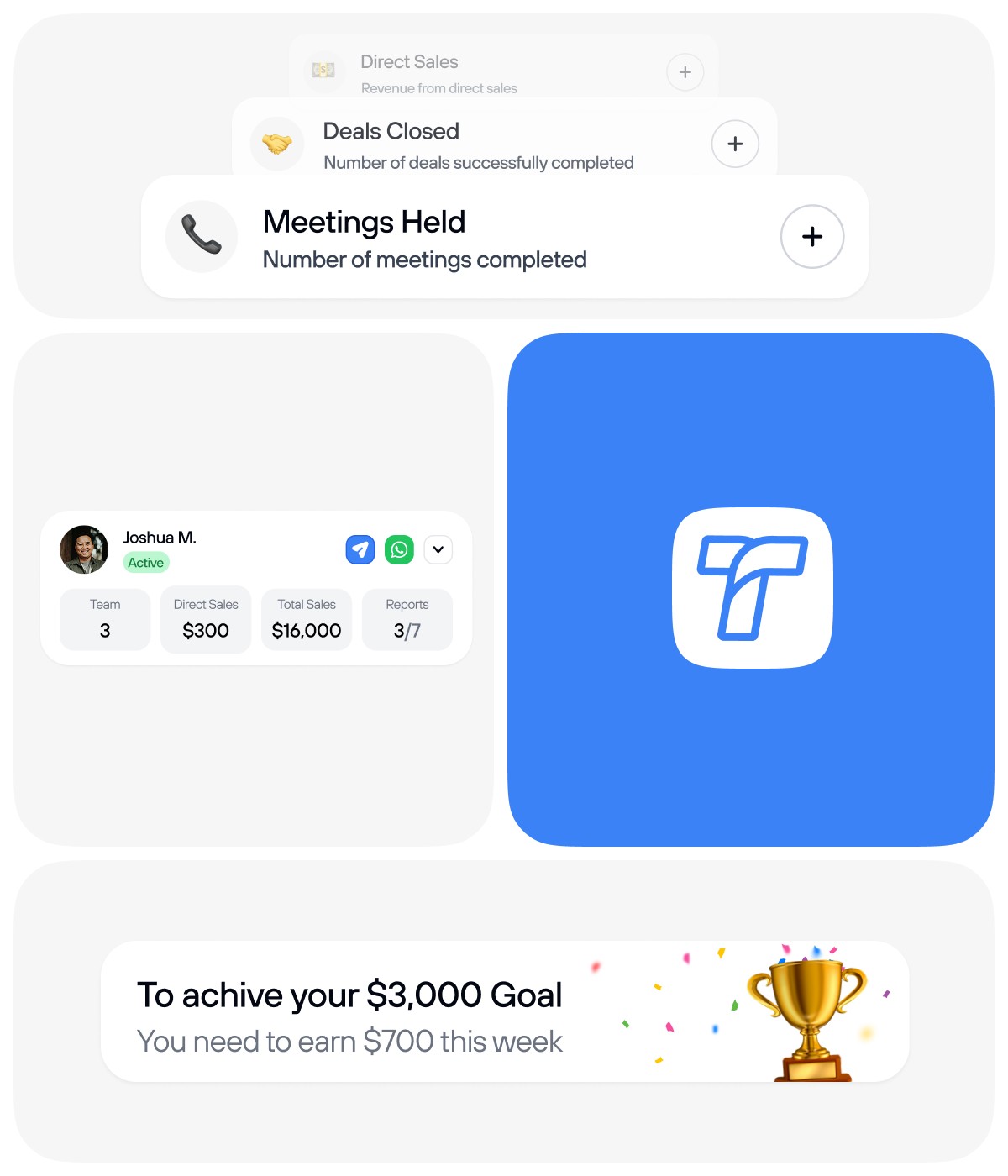
1 — Telegram UI constraints Mini Apps inherit Telegram's navigation patterns, color theming, and safe areas. The design had to feel native — not like a website crammed into a webview.
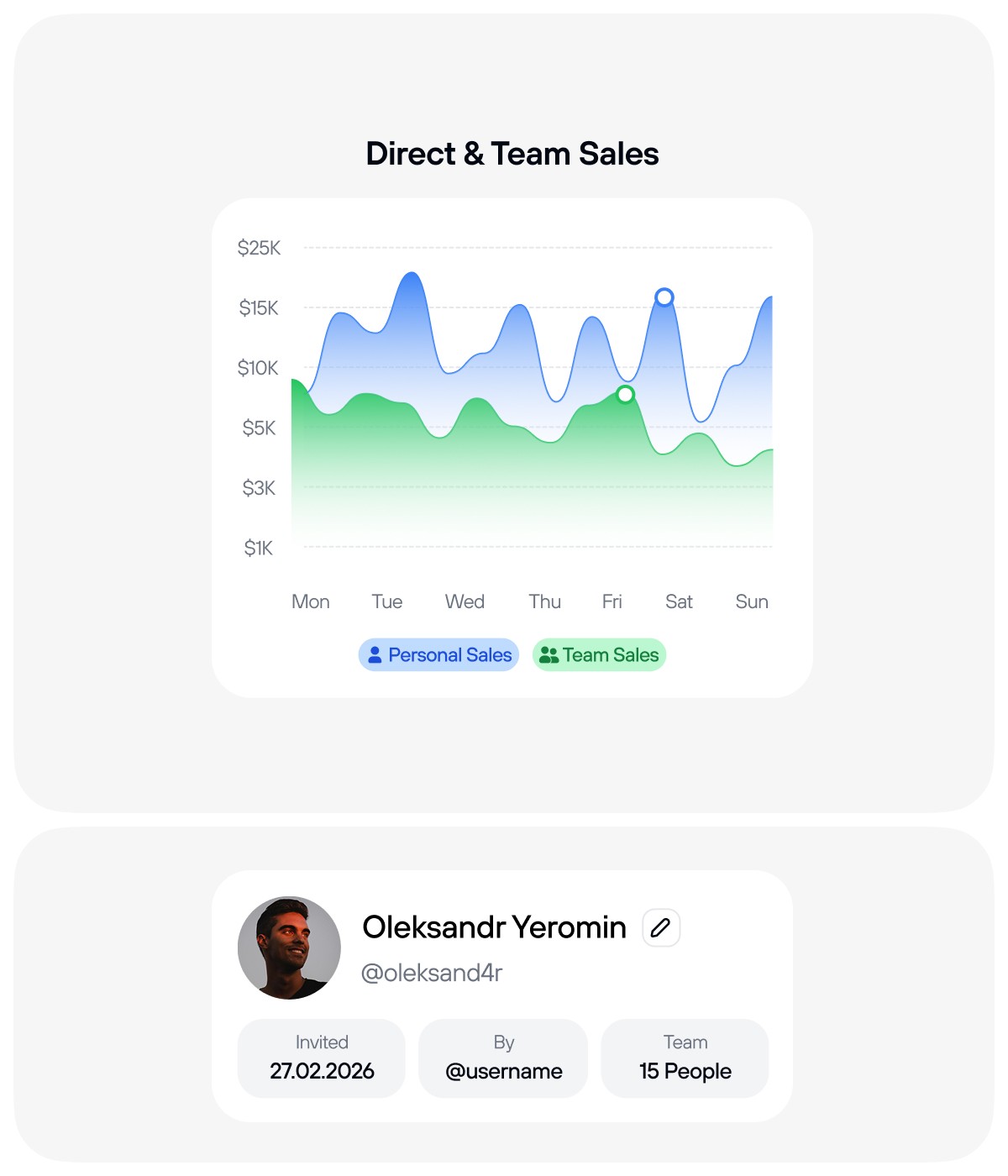
2 — Dual audience: individual and team The personal task view and the team competition view serve different mental models. Switching between them had to feel seamless, not like two separate products.
3 — Making competition feel motivating, not toxic Leaderboards can pressure people negatively. The UX needed to frame competition as celebration of top performers — not punishment for those lower down.
Discovery
Research focused on three areas:
Existing Telegram Mini Apps — audited the top productivity and engagement mini apps to understand navigation patterns, gesture conflicts, and performance constraints.
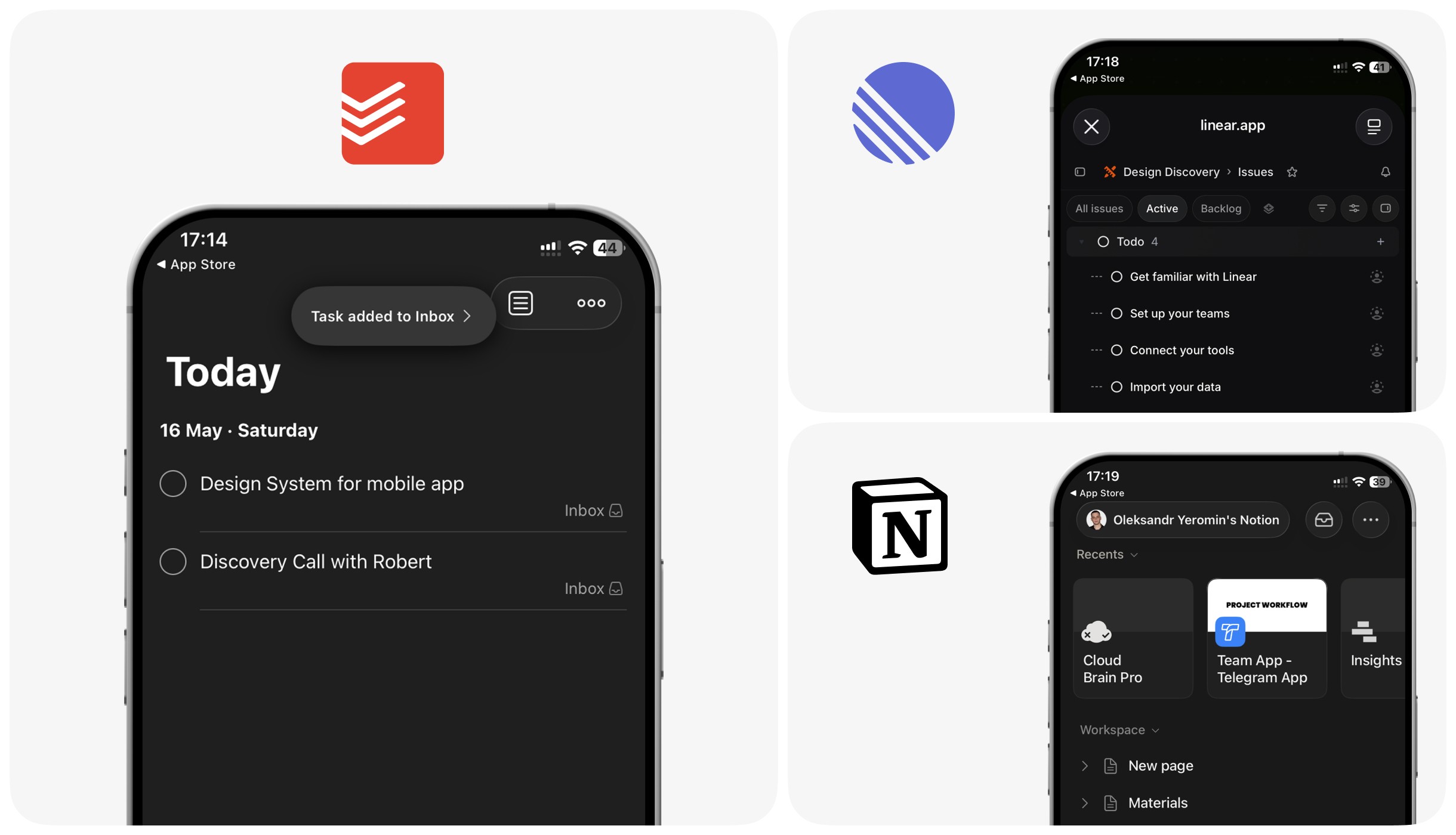
Task tracker benchmarks — Todoist, Linear, Notion tasks, TickTick — mapped what features users actually use daily vs what gets ignored.
Gamification patterns — studied how Duolingo, Habitica, and fitness apps handle leaderboards without creating anxiety. Key insight: showing personal progress first before social comparison reduces drop-off.
Thinking
The design priority order
Personal progress must be immediately visible on first open — no friction to see your own status
Team competition is opt-in — users choose to engage, not forced
The creator/admin flow must be powerful but not complex — setting up a challenge in under 2 minutes
Core UX decisions:
Bottom tab navigation (Telegram-safe, thumb-friendly for 25–45 demographic)
Card-based task architecture — scannable, not list-heavy
Leaderboard shows top 3 prominently + your own position always visible regardless of rank
Challenge creation: 3-step flow with smart defaults
Outcome
Scope delivered under NDA:
Total screens | 69 |
User flows | Personal tasks · Team view · Leaderboard · Challenge creation · Notifications |
Design system | Full component library — see below |
Platform | Telegram Mini App (iOS + Android) |
Design system includes:
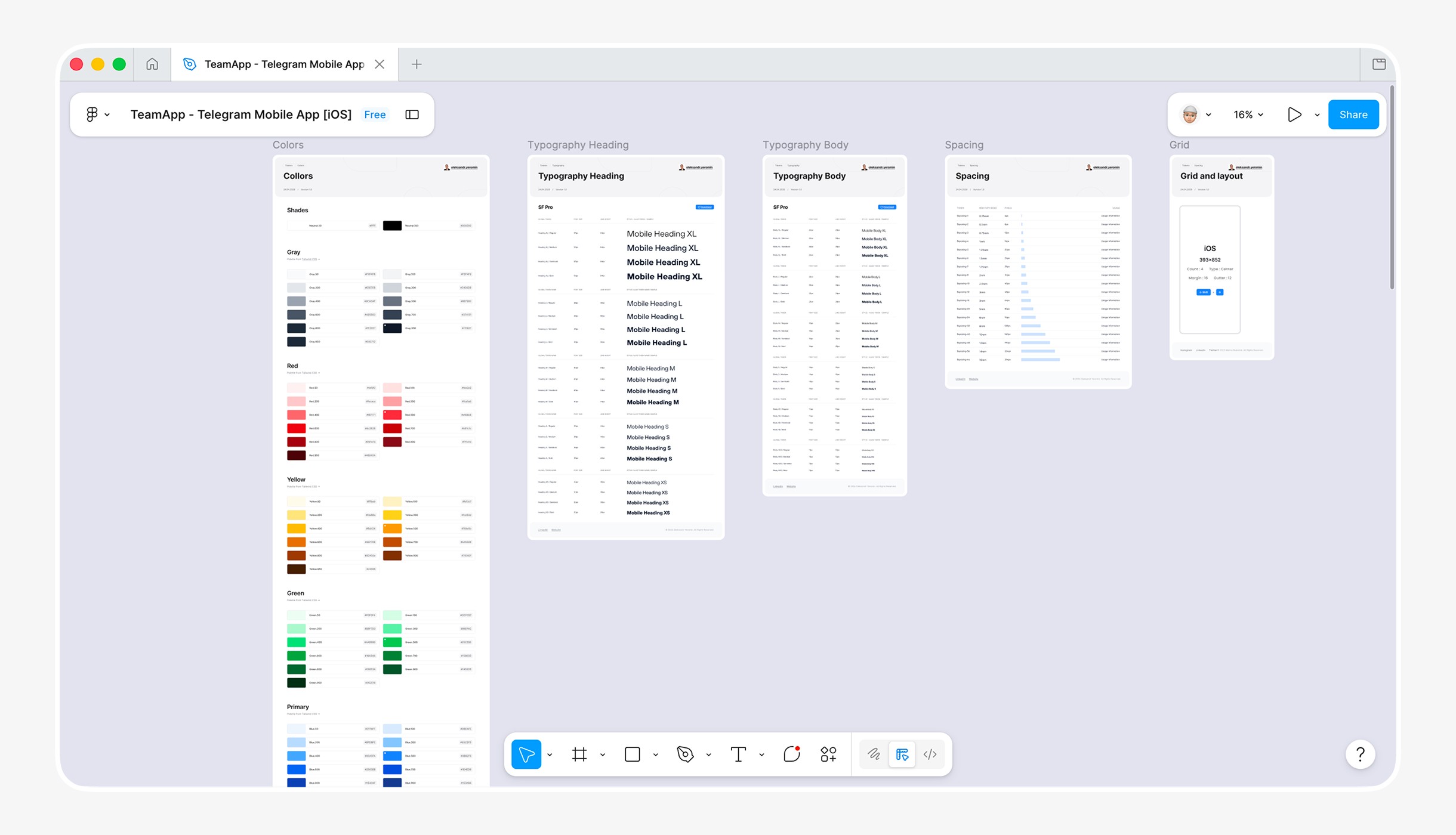
Color tokens (light + dark, Telegram theme-adaptive)
Typography scale
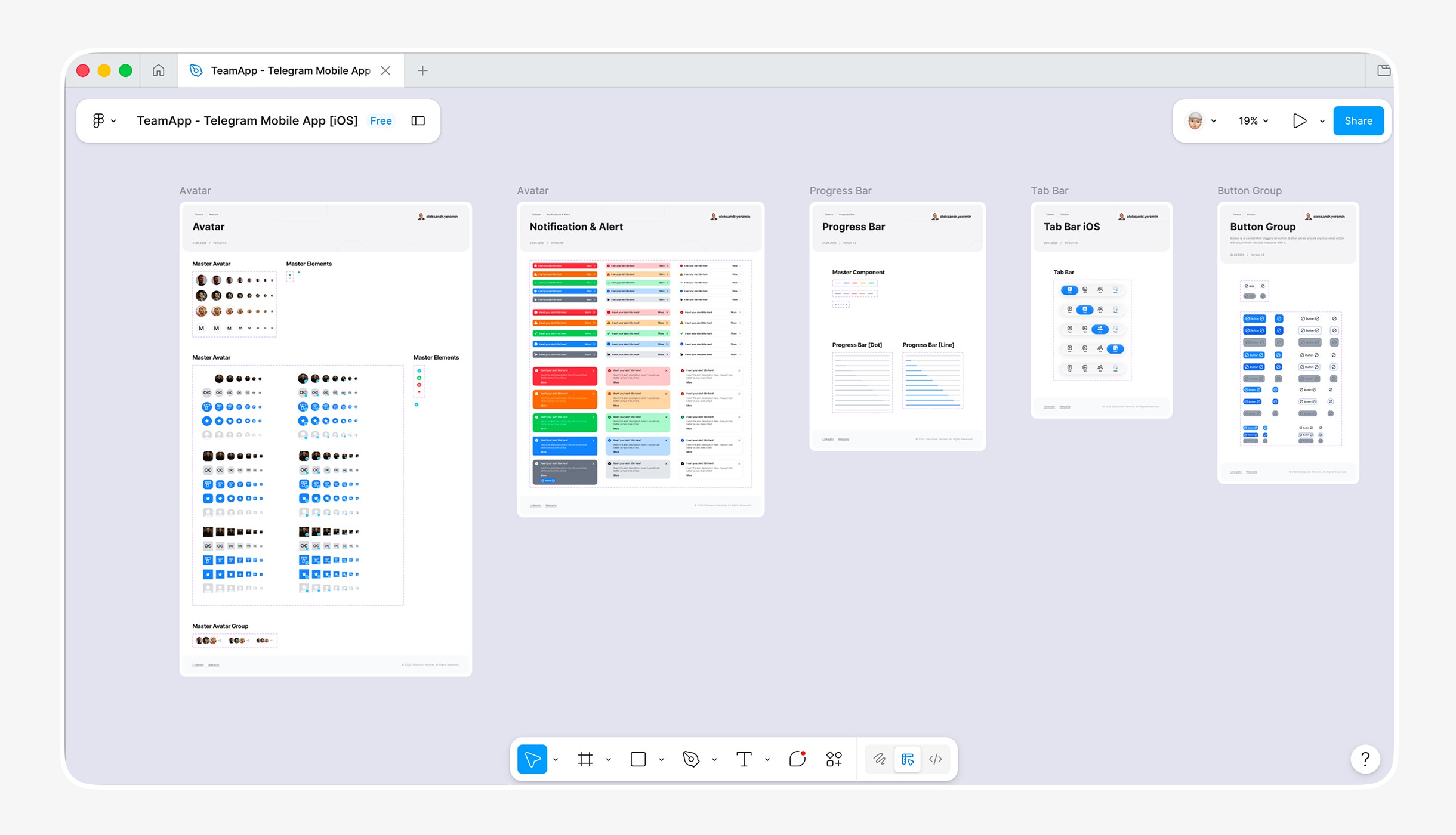
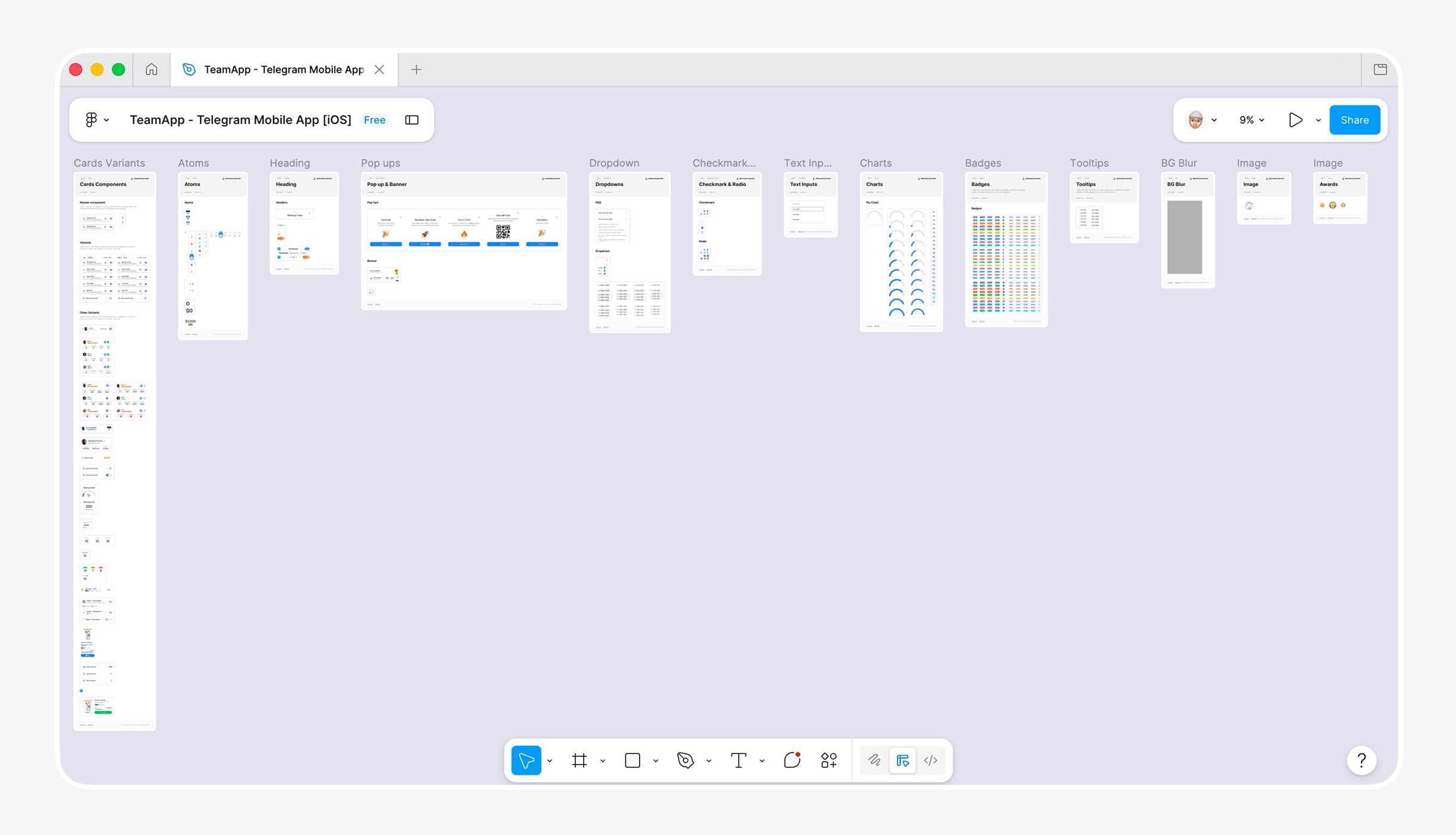
Component library: buttons, cards, inputs, badges, progress indicators, leaderboard components, navigation
Icon set
Motion principles
Results
Complete 69+ screen design ready for handoff
Design System adopted by the dev team from day one
Challenge creation flow validated at under 90 seconds in internal testing
Testimonial
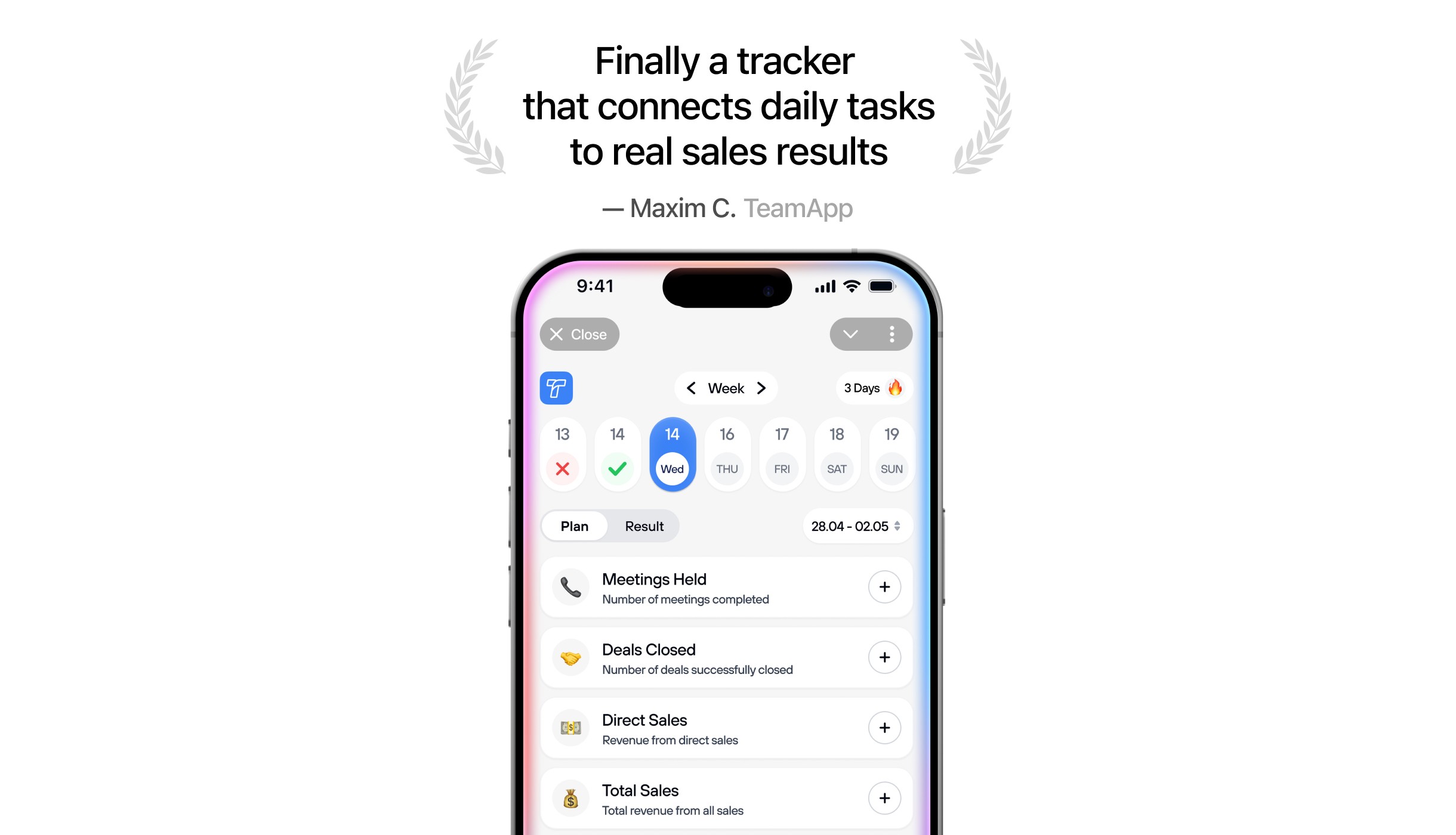
Finally a tracker that connects daily tasks to real results. Before TeamApp, our team had no way to see who was actually pushing forward and who was falling behind — until the numbers hit at the end of the month. Now we see it in real time, inside the tool we already use every day. The leaderboard changed how people show up. Competition became motivation, not pressure


Maxim
Founder ∙ TeamApp